About

| ~ Now Available ~ | Size |
Price |
||
|---|---|---|---|---|
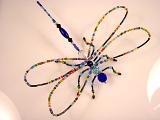 |
Beaded Dragonfly #214 Summer Solstice Dragonfly - Rainbow |
14 cm (5.5 inches) |
$16.95 |
|
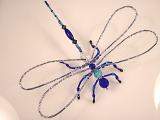 |
Beaded Dragonfly #215 Summer Solstice Dragonfly - Purple |
14 cm (5.5 inches) |
$16.95 |
|
Unique Beads
Beadlebug designs and colors are constantly evolving, slight variations are to be expected. Some bugs may not be exactly as pictured due to bead availability and variations in handmade beads. We use what we have on hand, or special-order beads as we need them. Special orders are welcome!
- Any species:
- industrial style
Care and Handling of your Beadlebug
To pick up a small spider or ant, gently grasp the head and tail between your thumb and forefinger. Dragonflies and scorpions are best held at the base of the tail. Please note-- Beadlebugs are sturdy and take a lot of bending to actually break; however, they quickly lose their shape if mishandled or dropped on the floor. Handle with care. If your cat sits on your bug, you should be able to gently reshape it.
A soft paintbrush works well to dust your bug and remove hair. Try not to get your bug wet... but they would probably be just fine in an aquarium.
Your Beadlebug's feet allow it to cling to a lampshade or other things made of fabric. For a more secure grip, slightly open the foot wires-- one at a time-- insert into fabric and gently press shut. Do not straighten the wire completely as this may cause the beads to fall off. Warning: flattening your bug to try to pin it to your lapel will compromise the integrity of the creature. It may never be the same. Giving it a ride on your knit hat, however, keeps your bug healthy and happy. Take care when removing your bug, one leg at a time and gently, to retain its shape.
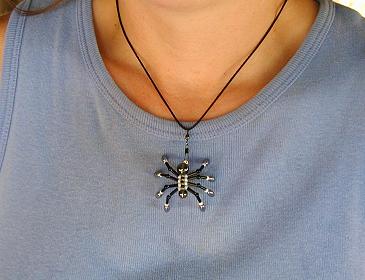
Beadlebugs are inspired by and modelled in a basic way after real bugs. We love Arthropods!